Where Should Your Downspout Drain? Keeping Roof Runoff Away From Your Foundation
October 24, 2026
A downspout should drain roof runoff at least 4 to 6 feet from the foundation, measured from the outside face of the wall, not the gutter edge. Eight to 10 feet is the better target where there is a basement, and a buried line should carry water at least 10 feet out. Start with a seamless gutter system.
How Far From the House Should a Downspout Drain?
The short answer is farther than most downspouts do. Standard guidance is to discharge runoff at least 4 to 6 feet from the foundation, and 8 to 10 feet is the better target in wet climates or any home with a basement. Water that lands within 3 to 4 feet of the wall significantly raises the risk of foundation cracks, basement leaks, and soil erosion, because that is close enough for the water to sit against the wall instead of percolating harmlessly into the yard.
One detail trips people up: measure from the outside face of the foundation wall, not from the gutter edge or the end of the roofline. A downspout that looks generous from the roof may still be dumping water a foot from the concrete. If the line goes underground, it should carry water at least 10 feet out before it discharges; a simple surface extension should reach at least 4 feet. Those are minimums, not targets.
Where Should Downspouts Drain to Avoid Water Damage?
Repeated saturation does two things at once. The soil around the foundation stays wet, and that standing water creates hydrostatic pressure that pushes against the wall until it finds a way in, often through hairline cracks that were invisible for years. Through a freeze-and-thaw winter those cracks widen, and the first sign is usually a damp basement or crawlspace and a musty smell rather than a dramatic leak.
You can also read the damage on the wall itself. Efflorescence, the white mineral staining that appears on concrete and masonry, is a sign that water has been moving through the material and evaporating at the surface. Left alone, the sequence continues into wider cracks, insect entry, and rot in framing that touches the wet wall. Gutters prevent foundation water damage only when the water they collect actually leaves the perimeter: a downspout that ends too close undoes the whole point.
Distance Is Only Half the Answer: Grade and Soil
A long extension is not a cure by itself. If the ground slopes back toward the house, water discharged 8 feet out simply runs home again: even a well-extended downspout will not protect the foundation if the grade tilts the wrong way, and a shallow swale between yards can do the same thing. The ground has to fall away from the wall for the discharge distance to mean anything.
Soil type matters too. Clay holds water far longer than sandy soil, so a property on heavy clay needs the water to travel farther before it stops being a threat, and clay can stay saturated long enough between storms to keep the wall wet. This is where drainage stops being a gutter question and becomes a landscape one; the American Society of Landscape Architects treats grading, planting, and runoff as one designed system rather than three afterthoughts.
If you are not sure whether your grade is working for you or against you, that is the moment to get it looked at. Contact a local GutterDome Dealer and they can tell you whether the fix is a longer discharge, a re-graded bed, or something more.
Your Options, From Splash Block to Buried Line
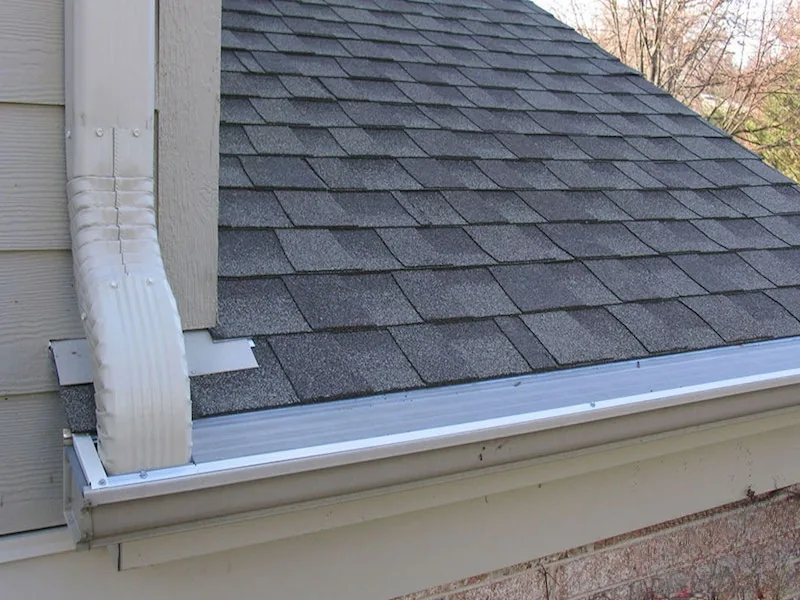
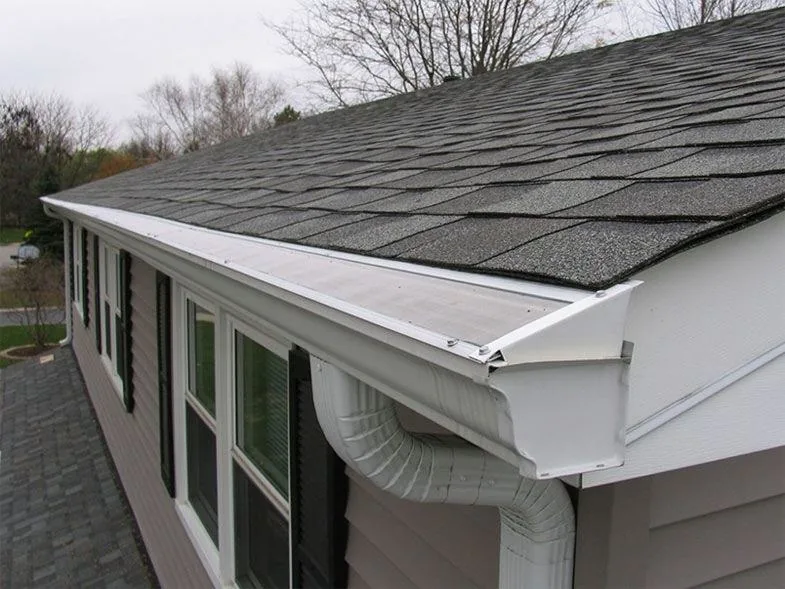
There is a ladder of solutions, and the right rung depends on how much water you are moving and where it can safely land. At the simplest end, a splash block breaks the force of the water and spreads it out, but it does not carry it away, so it usually sits within the danger zone. Better are extensions: flexible, rigid, or roll-out types that clip to the downspout and carry water several feet from the wall.
From there the options get more permanent. A buried solid pipe takes the water to a discharge point well away from the house, which is the cleanest answer when you have somewhere downhill to send it. A perforated pipe wrapped in landscape fabric can feed a planting bed instead, letting the water soak in slowly. A dry well holds and disperses a larger volume underground, and a rain barrel captures it for the garden. Each has a place; none is right for every yard.
Because the choice depends on your grade, your soil, and the volume your roof delivers, it is rarely a one-size answer. It is also where the “who installs this near me” question comes in: running and burying a downspout line is a measuring job, not a guess, and professional gutter guard installation is where the discharge plan gets sized to the roof.
The Clog That Starts the Chain
None of this works if the water never reaches the end of the downspout. A clogged gutter or a blocked downspout elbow defeats the entire system: the water either backs up and spills over the edge near the foundation or cannot leave the outlet at all. The elbow is a common culprit because it is the tight bend where debris collects, and it is the one place homeowners rarely check.
Keeping the path clear is mostly about timing. Gutters should be cleared at least twice a year, and standard practice is to pitch them about half an inch every 10 feet toward the downspout so water keeps moving instead of pooling. That regular maintenance is exactly what a routine like Chase’s home maintenance checklist is built around, and gutter cleaning is where the chain starts.
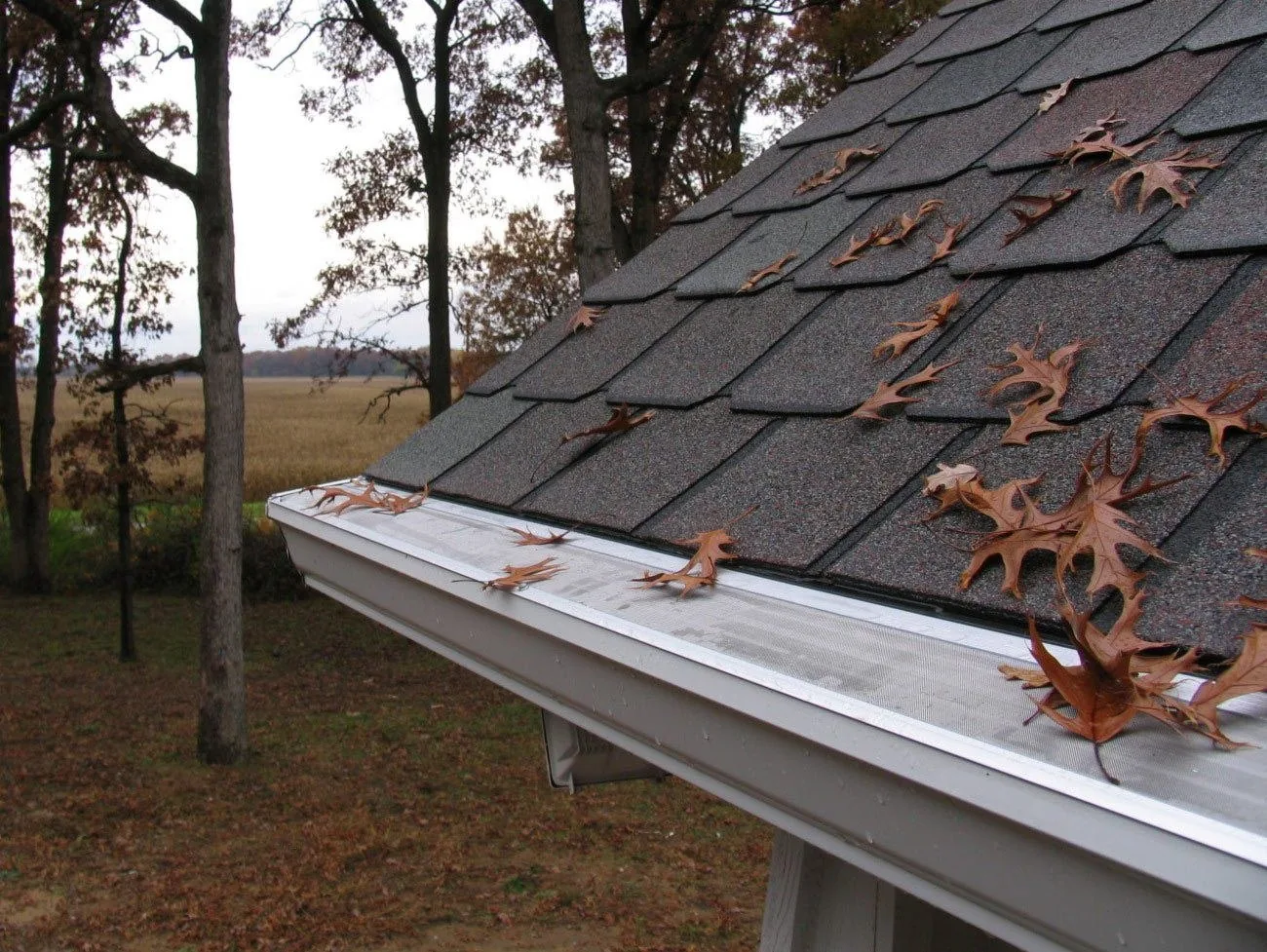
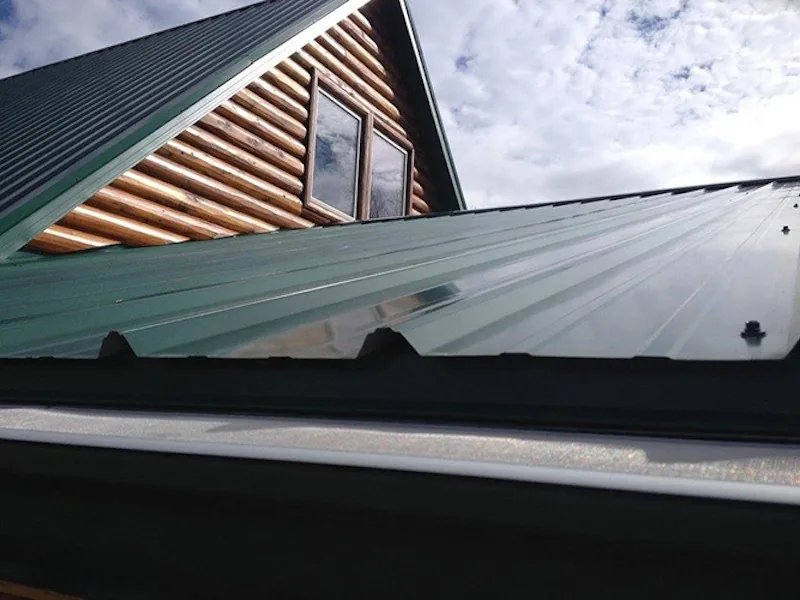
The most durable way to keep that chain unbroken is to stop the debris at the top. A fine micro-mesh guard keeps leaves, needles, and shingle grit out of the gutter and the downspout, so the water your drainage plan depends on actually arrives at the discharge point during the storm that matters.
What to Check Before You Decide
Before you buy anything, walk the perimeter during or just after a rain and watch where the water goes. Note any downspout that dumps within a few feet of the wall, any low spot where water pools against the foundation, and any sign of efflorescence or a damp basement wall. Those observations, not a product listing, tell you what your yard actually needs.
Then decide the method: extend the discharge, bury a line, improve the grade, or all three. A guard protects the system that carries the water to the outlet; the discharge plan protects the house from it.
If you would rather have someone walk the property and hand you a straight answer, that is what a Dealer visit is for. Request a free estimate from a local GutterDome Dealer and they can measure the run, check the grade, and size the discharge for your roof.
Frequently Asked Questions About Downspout Drainage
Q: How far from the house should a downspout drain?
A: At least 4 to 6 feet from the foundation, with 8 to 10 feet preferred in wet climates or homes with basements. Buried lines should carry the water at least 10 feet out, and you measure from the outside face of the foundation wall, not the gutter edge.
Q: What happens if downspout water discharges too close to the foundation?
A: Repeated saturation creates hydrostatic pressure that pushes water through hairline cracks, and freeze-thaw cycles widen them. The visible results are damp basements or crawlspaces, musty odors, and white mineral staining called efflorescence on the wall.
Q: Do I need a buried downspout line, or is an extension enough?
A: The choice between a buried downspout line and a surface extension depends on how much water you are moving and where it can safely land. A surface extension reaching at least 4 feet may be enough if your grade falls away from the house; a buried solid line running at least 10 feet to a discharge point is the more permanent answer when you need the water carried well clear.
Q: Does my yard’s slope matter more than the length of the extension?
A: Yard slope and extension length work together, but a bad slope can defeat a long extension. Water discharged 8 feet out still runs back to the wall if the ground tilts toward the house, so the grade has to fall away for the distance to mean anything.
Q: Can a clogged downspout cause basement water?
A: Clogged downspouts can cause basement water. A clogged gutter or a blocked downspout elbow stops water from reaching the outlet, so it backs up and spills near the foundation instead of draining away. Keeping gutters and elbows clear, and pitching gutters about half an inch per 10 feet toward the downspout, keeps the path open.
Q: Where should downspout water actually go: storm drain, yard, or rain barrel?
A: Downspout water should land somewhere it can drain away at least 4 to 6 feet from the foundation, and farther is better. That usually means your own graded yard or a buried line to a safe discharge point; a dry well or rain barrel captures it for slow release or reuse. Storm-drain connections are governed by local rules, so confirm before you tie in.
Ready to keep roof runoff away from your foundation?