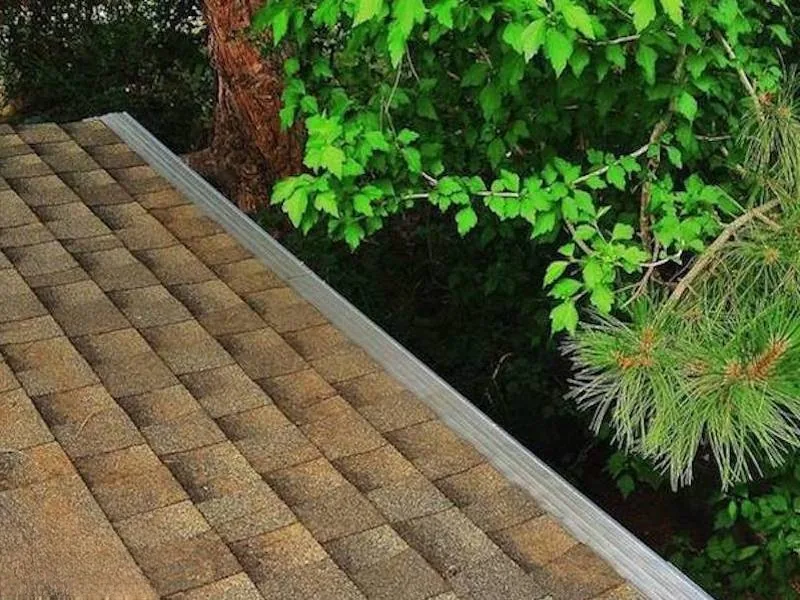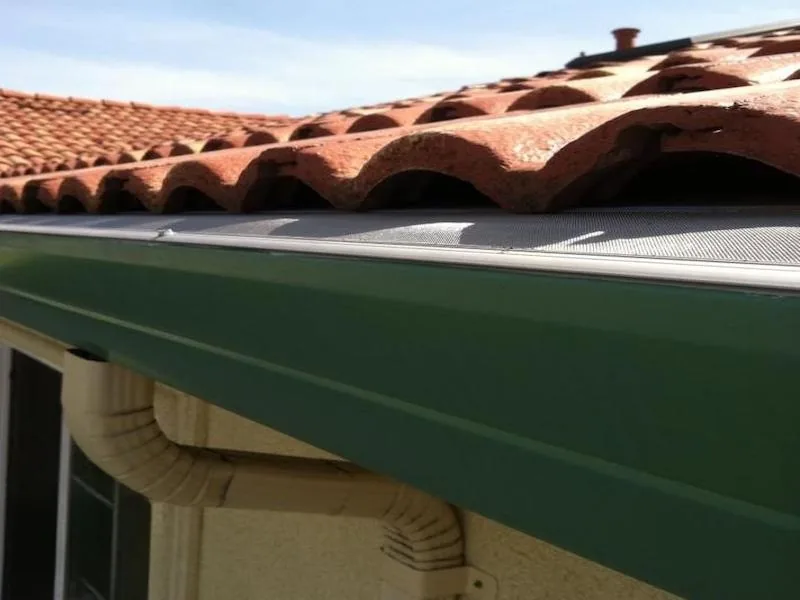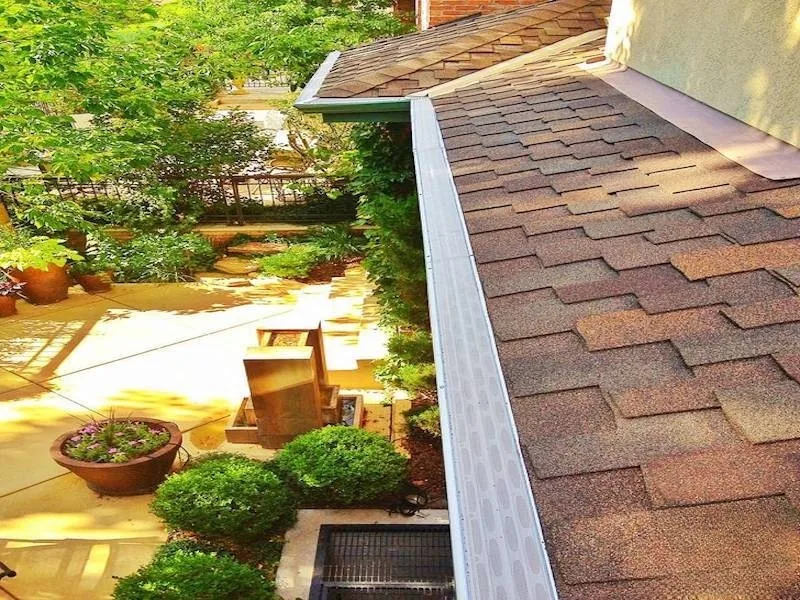
A gutter guard protects your foundation by keeping the run clear, so roof water is carried to the downspout and discharged away from the wall instead of soaking soil at the base. This article covers the early signs of water working on the wall, where that water should go instead, and how a covered run keeps it there.
How Clogged Gutters Damage Your Foundation
A clogged gutter stops moving water, so it sheets down the wall and soaks the soil at the base, where it expands when wet and shrinks when dry while the foundation stays put. The crack that follows gets quoted as concrete repair, but the cause is drainage, so the repair returns until the water is fixed.
When gutters clog with leaves, pine needles, and debris, water stops moving and starts spilling. Instead of being carried away from the roof, it sheets over the edge of the rain gutter, runs down the side of the house, and soaks into the soil at the base of the foundation. That is the whole mechanism - and it is why a gutter problem so often shows up first as a foundation problem.
Saturated soil is the real enemy. Soil that stays wet expands; soil that dries out shrinks. Both movements happen against a foundation wall that does not move with it. Repeat that cycle across a few seasons and the concrete begins to crack, shift, and weaken. The damage is rarely dramatic in a single storm. It accumulates quietly, which is exactly why homeowners notice it late - usually after the crack is visible from inside the house.
This is also why the problem is easy to misread. A foundation crack looks like a concrete problem, and it gets quoted as one. In practice the cause is almost always drainage: water that was supposed to leave the property and instead took the shortest path down the wall. Repairing the crack without fixing the water is a repair that gets repeated. According to Angi’s gutter cleaning cost guide, the guidance behind that maintenance is blunt - gutters need attention at least twice a year, or you risk roof and foundation damage.
Standing water is the other consequence, and it is not only a foundation issue. Water sitting in a clogged rain gutter is exactly the habitat the EPA’s guidance on preventing mosquito bites tells homeowners to eliminate first - it lists rain gutters ahead of buckets, tires, and tarps. A gutter that overflows in a moderate rain is holding water the rest of the time.
Signs Your Foundation May Already Be at Risk
The signs are water stains on the wall or slab edge after rain, stair-step cracking in block walls, doors and windows that stick more than they used to, eroded soil or mulch washout at the downspouts, and white chalky deposits. One is worth a look, and several after a wet season means water has been arriving longer than you think.
- Water stains on a foundation wall or slab edge after rain
- Stair-step cracking in block foundation walls
- Cracks in interior drywall near windows and doors
- Doors and windows that stick more than they used to
- Soil erosion or mulch washout near downspouts
- White, chalky deposits on the foundation wall
- Gutters overflowing during moderate rainfall
- Standing water near the foundation after storms
Any one of these is worth a look. Several of them together, after a wet season, usually means water has been arriving at the foundation for longer than you think.
Where the Water Should Go Instead
It should leave the roof at the gutter, run the downspout, and discharge where it can drain away from the slab rather than beside it. A discharge two feet from the wall is the same volume of water in a different part of the same soil, and ground that slopes toward the house undoes the best gutter run.
A working drainage system is a chain: roof, gutter, downspout, away. Rain lands on the roof, drops into the gutter, travels to the downspout, and leaves the property at a point where it can drain. Break any link and the water goes somewhere else - and the place it goes is usually the one you cannot see.
The last link is the one most often ignored. A downspout that discharges two feet from the wall simply moves the problem in a straight line: the same volume of water, arriving at a different part of the same soil. Extending the discharge, or directing it into a bed that drains, is the difference between water leaving the property and water soaking in beside the slab.
Grading matters in the same way. Soil that slopes toward the house - which is what happens when backfill settles, or when a bed is built up against the wall - sends surface water to the foundation no matter how well the gutters work. Fixing drainage means looking at both: what the roof sends down, and where the ground sends it next.
If water still stands beside the slab after a storm, have a local Dealer trace the whole run from roof to discharge.
How GutterDome Prevents Foundation Problems
It removes the first failure: debris never gets into the gutter, so the gutter never fills and the water keeps moving off the roof. The patented dome sheds leaves, needles and grit over the front edge while water drops through the curved opening, on an extruded 6063 aluminum frame carrying T304 surgical-grade stainless-steel wire mesh.
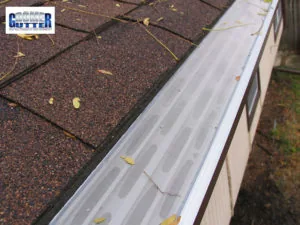
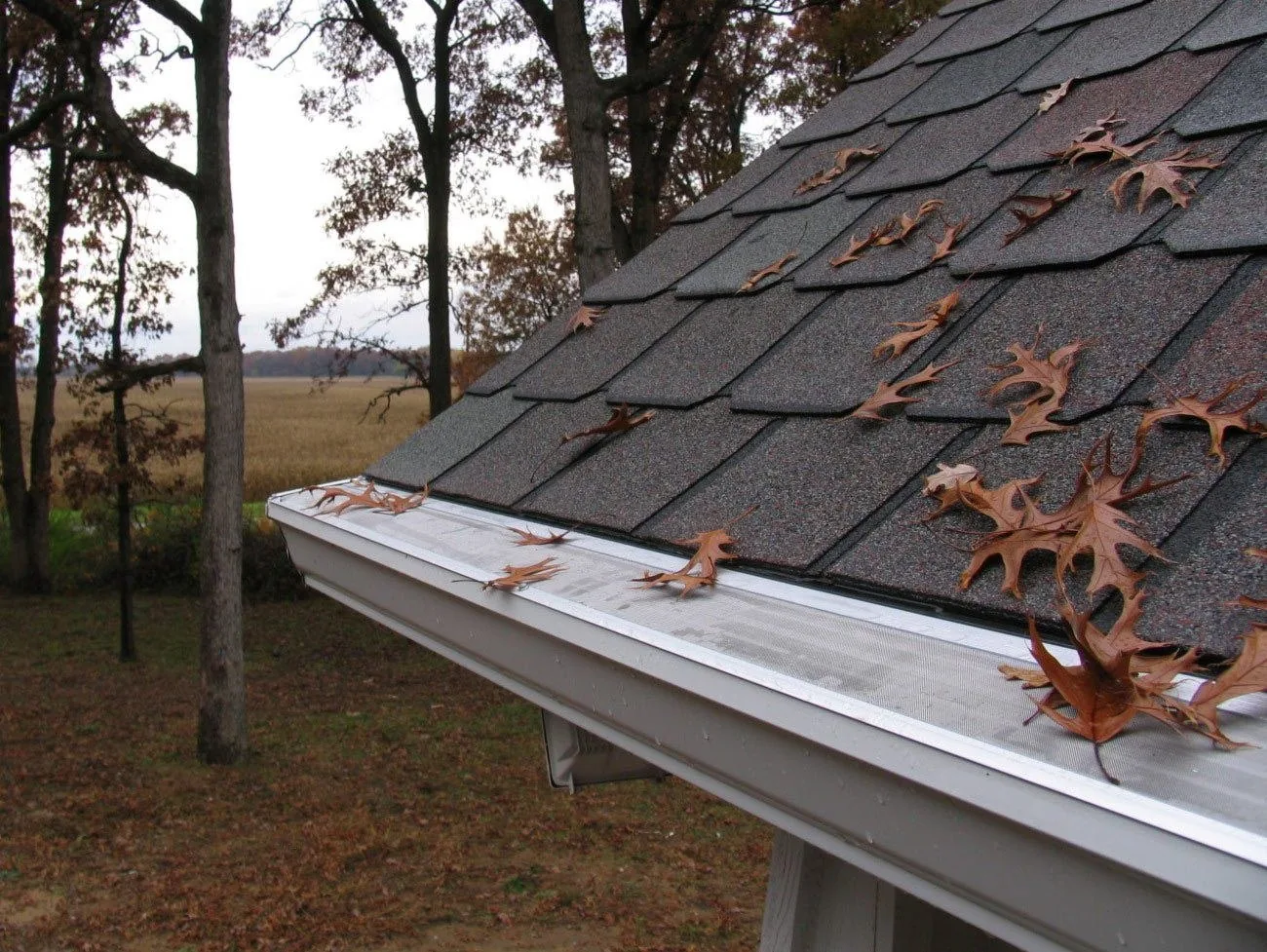
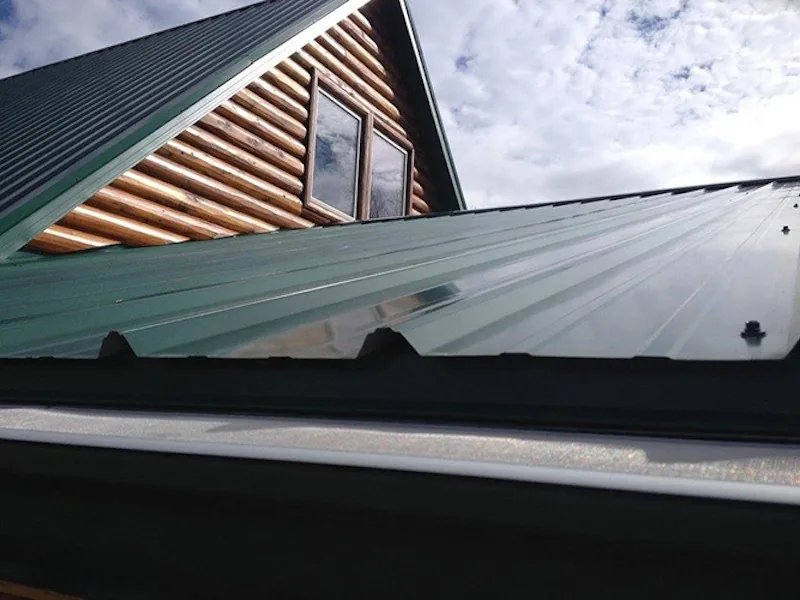
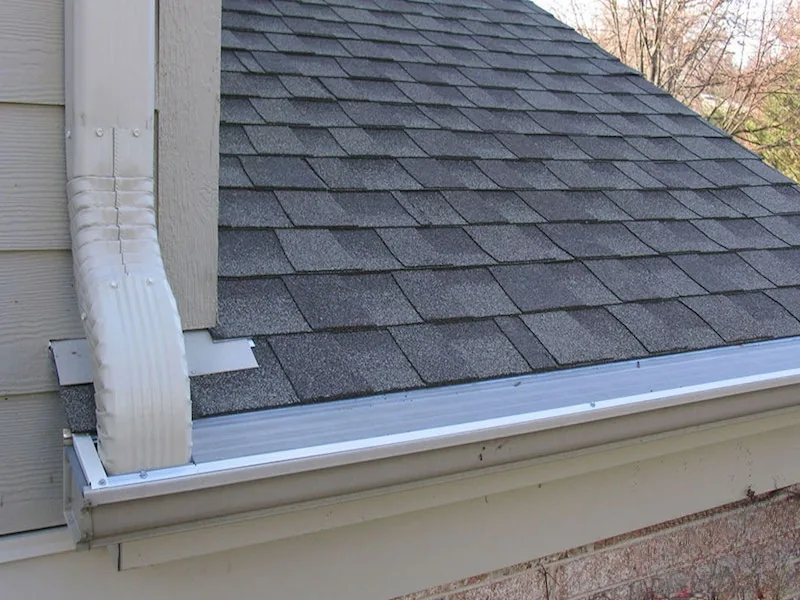
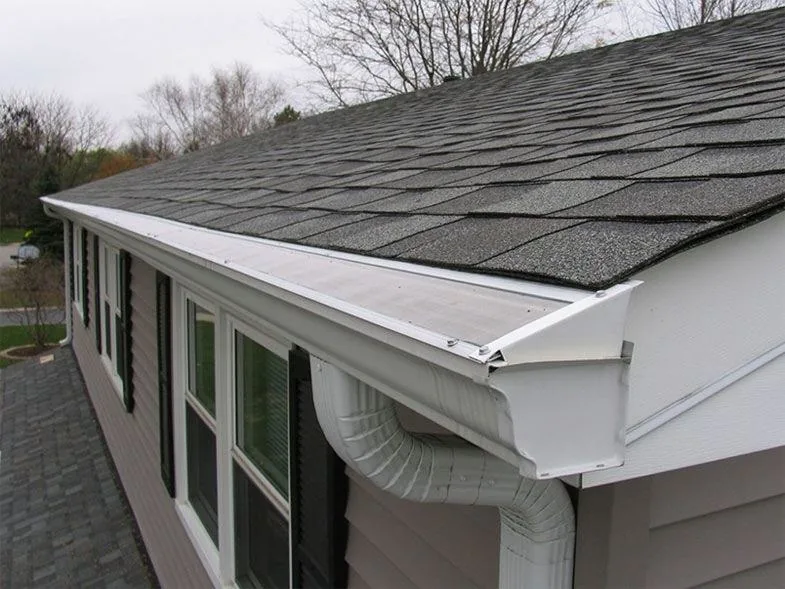
GutterDome guards fix the first link in that chain: debris never gets into the rain gutter, so the rain gutter never fills. The patented dome-shaped design sheds leaves, needles, and grit over the front edge while water drops through the curved opening and into the gutter below.
What the system is made of matters as much as its shape. The support frame is extruded 6063 aluminum with a clear anodized finish - extrusion rather than roll-forming, which is the material distinction that decides whether a guard still sits flat on the roofline in year twelve. The top surface is a T304 surgical-grade stainless-steel micro-mesh: the screen water passes through, sized to reject the debris that starts the whole problem. The frame carries the load; the mesh handles the flow. Together they are what a GutterDome ultra-premium guard actually is.
Where a plastic screen collapses under a season of leaves, or a thin roll-formed frame sags and pulls away from the fascia, this is a system built to hold its shape - and it is warranted accordingly.
The 30-Year Solution
The 30 years is a warranty term rather than a lifecycle guess: every installation is covered by a 30-Year Lifetime Limited Warranty that transfers automatically, one time, to the next owner when an Authorized Dealer installs it. The uPVC (GD45P) line carries a 20-Year Lifetime Limited Warranty, and the term assumes a correctly pitched, fully seated run.
Every GutterDome installation is backed by a 30-Year Lifetime Limited Warranty, which is automatically transferable one time to the next homeowner and installed by an Authorized Dealer, who can also handle seamless gutter installation if your existing gutters need replacing. The GutterDome uPVC (GD45P) carries a 20-Year Lifetime Limited Warranty. The result is a complete water-management system: water leaves the roof, reaches the ground, and drains away from the slab - every storm, without anyone climbing a ladder.
It is worth being clear about what that warranty covers, because the word gets used loosely in this category. It applies to a registered installation by an Authorized Dealer, which is why the installation matters as much as the product: a correctly pitched, fully seated run is what the coverage assumes.
If you would rather know the number before you decide, our 2026 gutter guard pricing guide breaks down installed cost per linear foot by system, and what changes it from one roof to the next.
Ready for gutter protection you never have to think about again?